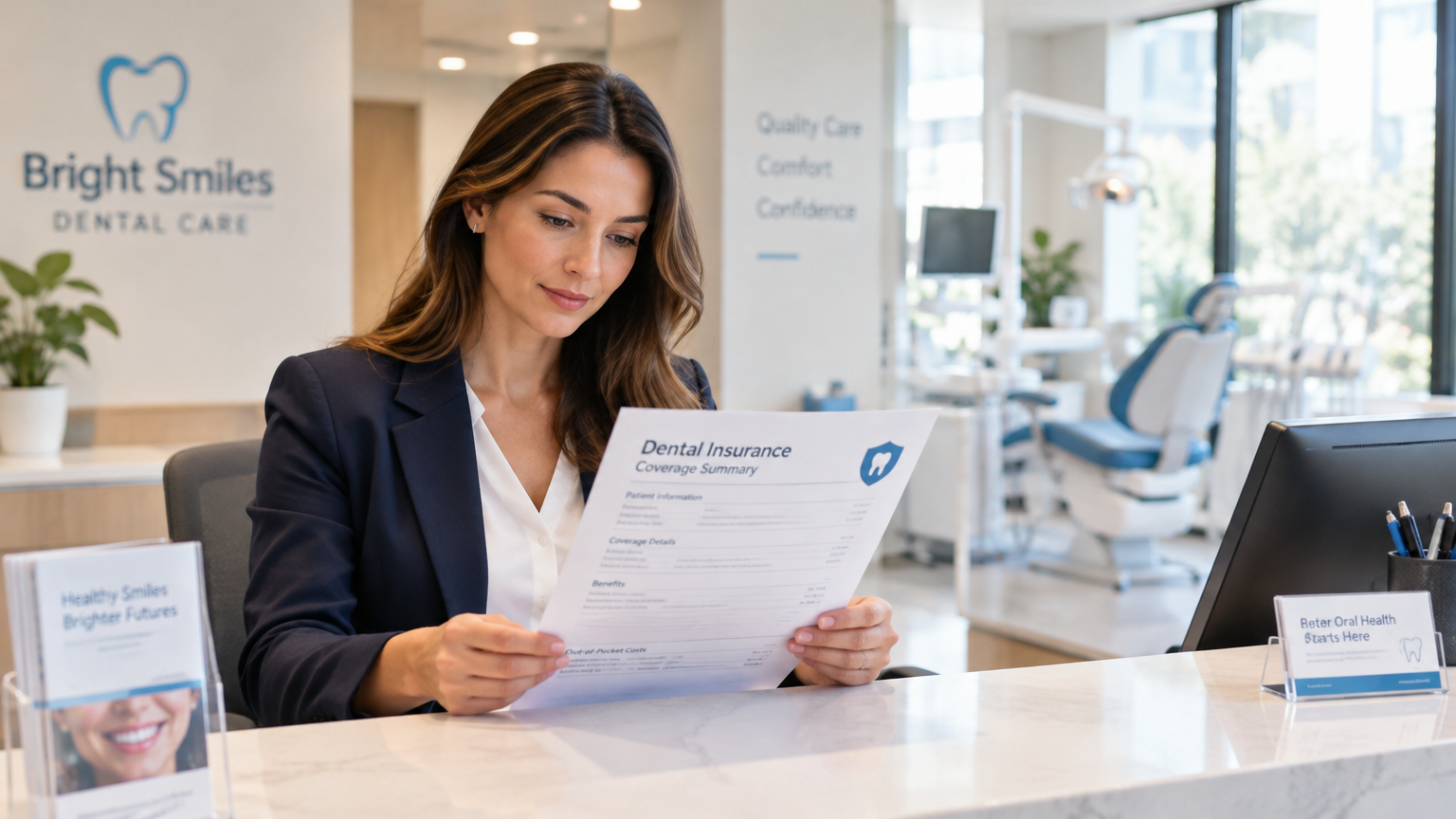
Here’s a detailed, Dubai-specific guide to understanding health insurance dental coverage Dubai — what dental benefits are under the Essential Benefits Plan (EBP), what’s in enhanced policies, typical out-of-pocket costs, whether to go with a dental add-on or standalone policy, and what to ask before you renew.
Quick Summary
- The Essential Benefits Plan (EBP) covers only very basic dental emergencies (up to AED 500 limit on consults, fillings, extraction, scaling, etc.), with 30% coinsurance.
- Enhanced and premium health plans often include better dental benefits: check-ups, basic restorative work (fillings, root canals), sometimes orthodontics or implants — but with annual sub-limits, waiting periods, and exclusions.
- Dental treatment costs in Dubai vary significantly. Fillings cost about AED 250–AED 1,200, crowns AED 2,500–AED 6,500, implants AED 8,000–AED 18,000, and orthodontics AED 12,000–AED 25,000 or more. Clinics in premium areas (JBR, Marina, Business Bay) tend to charge much more.
- Whether to add a dental add-on or buy a standalone dental policy depends on your expected dental needs, whether your employer plan allows riders, and whether you’re anticipating major work (crowns, braces, implants). Standalone plans exist but are less common; adding a rider to health insurance is often easier.
- Before renewing, ask your broker about annual dental limit, coinsurance/co-pay, waiting periods, eligible network providers, coverage for major work, pre-existing exclusions, and clarity in the policy wording around “cosmetic” versus “medically necessary.”
Understanding Dental Coverage in Dubai Health Insurance
What the EBP Covers (Minimum Legal Standard)
The Essential Benefits Plan, mandated by the Dubai Health Authority (DHA) under Circular GC 03/2024 (effective 1 January 2025), is the minimum health insurance all residents with employer-sponsored plans must have.
Under EBP, dental benefits are extremely limited:
- Up to AED 500 annually for consultation, fillings, extraction, root canal treatment, scaling, x-rays, antibiotics, and prophylaxis.
- 30% coinsurance applies to each dental visit under these benefits.
- Routine cleanings, cosmetic work, orthodontics, and implants are not covered under standard EBP.
If you only have EBP coverage, you’ll pay for almost everything related to non-emergency dental care out of pocket.
What Enhanced and Premium Plans Offer
Plans above EBP, called enhanced or premium, may include:
- Basic perks: Routine check-ups, cleanings, simple fillings, sometimes x-rays and scaling. Sub-limits of AED 1,500–AED 3,500 are common. Coinsurance usually ranges from 20–30%.
- Restorative work: Root canals, crowns, and extractions often receive partial coverage. Premium plans may include dental prostheses or implants in part.
- Orthodontics: Braces or clear aligners are often excluded, or only covered for children under a certain age, with waiting periods.
Even enhanced plans have separate sub-limits and exclusions. It pays to compare what different insurers offer, especially among the brands common in Dubai (ADNIC, Daman, AXA, Bupa, Allianz, etc.).
Typical Out-of-Pocket Costs in Dubai (2026 Data)
Here’s what dental treatments cost across different clinic tiers (premium vs budget). Use this to understand what coverage you might need:
| Dental Procedure | Budget / Deira–Karama-Area Clinics | Premium Clinics (JBR, Marina, Dubai Hills, Downtown) |
|---|---|---|
| Routine check-up & cleaning | AED 250–700 | AED 500–900 |
| Composite filling (single tooth) | AED 400–1,200 | AED 1,000+ depending on material |
| Root canal treatment (molar) | AED 1,800–4,500 | AED 3,500–6,000+ |
| Porcelain crown | AED 2,500–6,500 | AED 5,000–8,000+ depending on lab/material |
| Implant + crown (single tooth) | AED 8,000–18,000 | AED 12,000–25,000+ in premium hospitals |
| Orthodontic treatment (traditional braces) | AED 12,000–25,000 | AED 20,000–35,000+ for adult full case (premium) |
If you expect just cleanings and maybe one or two fillings a year, a modest dental benefit with an annual limit of AED 1,500–AED 2,500 may suffice. But for crowns, implants, or orthodontics, costs quickly run into the tens of thousands.
Add-On vs Standalone Dental Policies: Which Is Right for You?
Dental Add-On (Rider) on a Health Insurance Plan
Pros:
- Simplifies billing: one insurer, one renewal, one card.
- Often cheaper than buying entirely separate dental coverage.
- Usually integrated with your existing plan’s provider networks.
Cons:
- Annual dental limit is likely modest.
- Waiting periods may apply (e.g., 6–12 months for certain dental work).
- Larger or cosmetic work may still be excluded.
Standalone Dental Policy
Pros:
- More focused benefits for dental — sometimes higher limits and more flexibility.
- A strong option if your health plan is locked into EBP or minimal benefits and you know you need bigger dental procedures.
Cons:
- You’ll carry a separate policy: different renewal schedules and claims process.
- Standalone plans are less common in Dubai; fewer providers available.
- May still exclude cosmetic or major orthodontic work unless heavily priced.
What Choice Makes Sense
- If you rarely need major dental work: A rider on your health plan is likely sufficient.
- If you or your dependents anticipate crowns, implants, or braces: Standalone or premium dental coverage is worth considering.
- Check whether your current employer plan can be upgraded or have the dental rider added — sometimes it’s simpler than you think.
Key Questions to Ask Your Broker Before Renewal
Before you sign or renew, get clear answers to these essential questions:
- Annual Dental Limit and Sub-Limits
- What’s the maximum payout per year for dental care?
- Are there separate sub-limits for preventive vs. restorative vs. orthodontics?
- Coinsurance / Co-Pay and Deductibles
- What share will you pay (20%, 30%, or more)?
- Are there different coinsurance rates for major work?
- Waiting Periods
- How long after policy start must you wait before claiming for fillings, crowns, braces, or implants?
- Covered Procedures vs. Exclusions
- Is orthodontics included, and for whom (children only, under a certain age)?
- Are implants considered medical necessity or cosmetic?
- What about cosmetic dentistry (veneers, whitening)?
- Provider Network & Location
- Does the insurance cover your preferred clinic network (Marina, Downtown, etc.)?
- Does it include premium hospital-based dental centres or only smaller clinics?
- Pre-Existing Conditions & Previous Dental History
- Any exclusions or waiting periods for chronic dental issues?
- If you have prior work (crowns, implants), will restrictions apply?
- Policy Definitions
- Ensure clear definitions of “emergency dental,” “medically necessary,” and “orthodontic treatment” are spelled out.
Local Specifics in Dubai to Keep in Mind
- The EBP regulated minimum applies to all employer-sponsored health insurance policies in Dubai. Enhanced policies are optional and depend on your employer’s budget or your ability to buy personal cover.
- Dental care costs vary widely by area. Clinics in Karama, Deira, Satwa tend to be more budget-friendly; clinics in Dubai Hills, JBR, Marina, Downtown are much more premium.
- Most dental insurers and plans require pre-authorisation for any major dental procedure costing above a threshold (often AED 500–1,000). Always check how your insurer handles large or complex treatments.
Comparison Table: EBP vs Enhanced Plans (Dental Focus)
| Feature | EBP (Legal Minimum) | Enhanced / Premium Dental Rider or Plan |
|---|---|---|
| Routine cleanings & check-ups | Not covered or minimal | Usually covered under preventive benefit |
| Fillings / simple restorations | Up to AED 500 total per annum, 30% coinsurance | Covered with higher sub-limit (e.g., AED 1,500–AED 5,000), co-pay 20–30% |
| Crowns / root canals | Included within AED 500 if emergency; otherwise excluded | Partial cover, subject to approvals and annual cap |
| Orthodontics | Not covered or only emergency | Sometimes included for children; rarely fully for adults |
| Implants / prostheses | Almost always excluded | Covered only on premium plans or standalone dental policies |
| Cosmetic dentistry | Excluded | Rarely included, often excluded entirely |
When Should You Add a Dental Rider vs Buy a Standalone Plan?
- Add a rider if your main health policy allows it and you’re seeking moderate extra dental coverage without having to manage separate renewal or paperwork. This is a good option for families wanting routine and small restorative work.
- A standalone policy makes sense if your health plan is inflexible, carries no dental benefit, or you know large, expensive treatments are needed (crowns, implants, orthodontics).
Remember, standalone dental policies may still have waiting periods, sub-limits, and material exclusions (e.g., zirconia vs. metal crowns, adult vs. child orthodontics).
Frequently Asked Questions
Q1: Does my EBP cover dental cleanings and routine exams?
A: No — EBP generally only includes emergency dental treatment (pain, infection, trauma) up to AED 500 yearly. Routine check-ups, cleanings, and preventive work are not covered under EBP.
Q2: What will I pay out of pocket for common procedures like fillings, crowns, or braces?
A: If uninsured or outside insurance coverage:
– Filling (composite): AED 250–AED 1,200
– Porcelain crown: AED 2,500–AED 6,500
– Full orthodontic treatment (adult braces): AED 12,000–25,000+
If covered by an enhanced plan or dental rider, expect coinsurance (often 20–30%) and not full coverage, especially for major work.
Q3: Is there a waiting period before orthodontics or implants are covered?
A: Yes. Most enhanced and premium plans require waiting periods (often 6–12 months or longer) before you can claim orthodontic treatment or major restorative work. Some exclude these services entirely.
Q4: Can I add dental to my employer plan, or must I get a standalone policy?
A: Many enhanced health insurance plans offer dental riders or add-ons. It’s usually simpler to add dental to your existing plan. Standalone dental policies exist but are less common.
Q5: What defines “cosmetic vs medically necessary” dental services in policies?
A: Cosmetic services (veneers, whitening, elective bonding) are almost always excluded. Medically necessary work (crowns after root canal, extractions due to disease) may be covered under the medical or dental portion but at a reduced rate. Always check definitions in your policy document.
Ready to Get Started?
You deserve dental coverage that matches your lifestyle, not just emergencies. Start by reviewing your current health insurance certificate — check your annual dental limit, co-insurance rate, waiting periods, and covered procedures. Then:
- Compare enhanced plans or dental riders from major insurers like Daman, ADNIC, Bupa, AXA, and Allianz.
- Get quotes for standalone dental cover if you anticipate major restorative work.
- Always request written treatment plans